
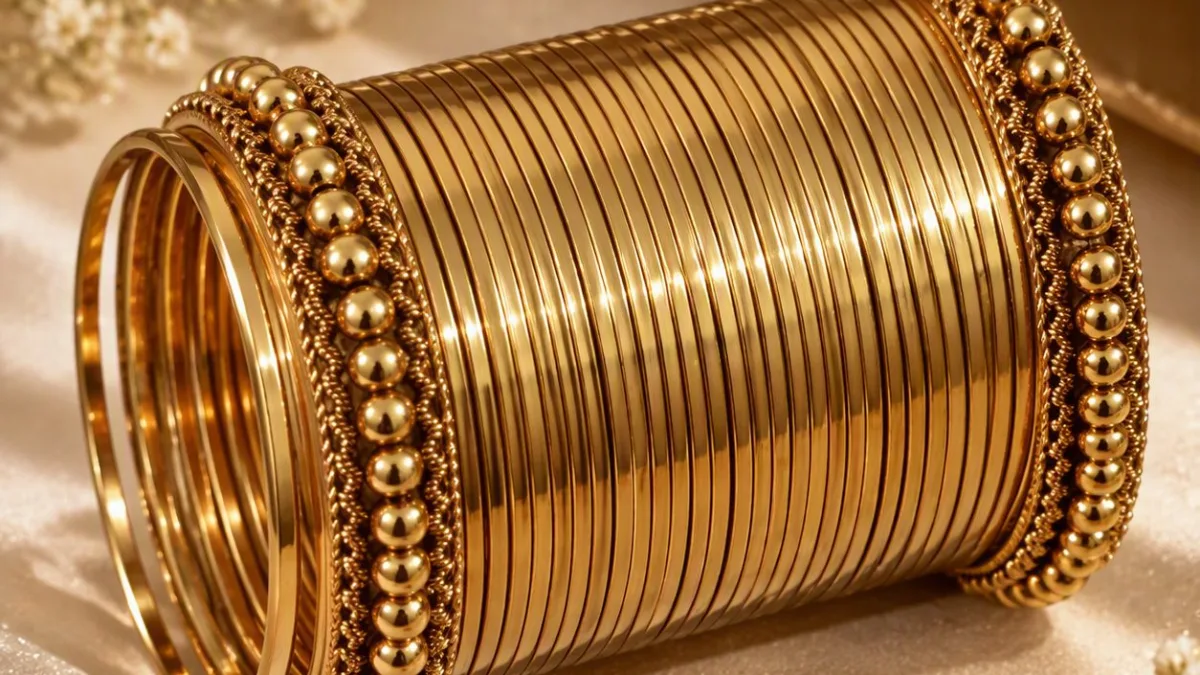
The bench is older than the country's independence. It was Ustad Rafiq's grandfather's, and it has been repaired, re-weighted and worked on every day since.
Mihrunnisa began in a two-room workshop in Karachi's old quarter. We still work there. The lane smells of kerosene and rose water, and the sound you hear from the doorway is the steady tap of a setting hammer.
The setter's eye
Hand-setting kundan is a discipline of the fingertips. The gold ribbon must be pressed to exactly the right tension — too tight and the stone cracks, too loose and it rattles. Rafiq can feel the difference through the tool. It took him nine years to learn.
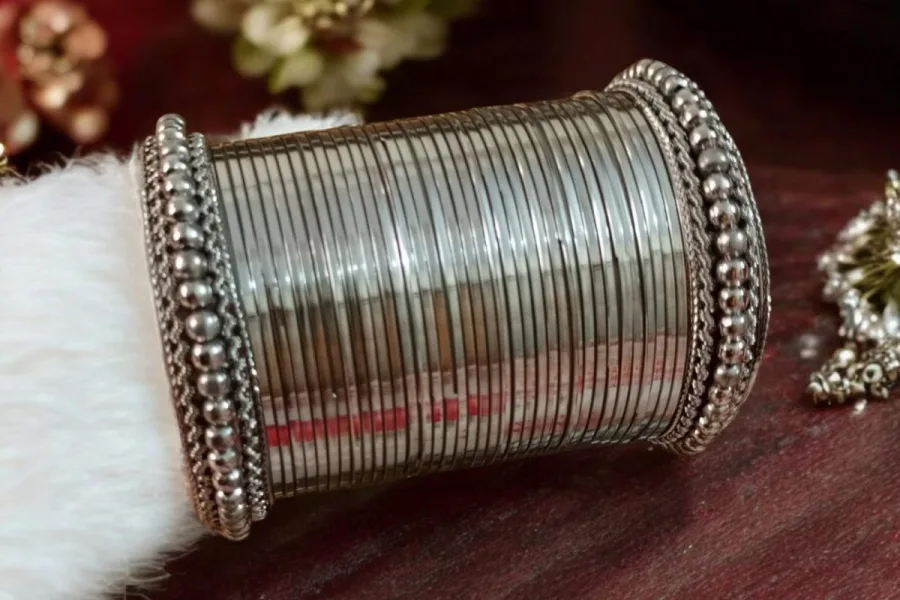
The machine is fast. But a machine cannot look at a stone and decide how it wants to sit.
Ustad Rafiq
Why we still do it by hand
We could cast, plate and finish far faster. But a cast piece has one look; a hand-set piece has a hundred. Small variations in stone, tension and polish are what make a piece feel alive — and what make it worth keeping.
- Every piece is drawn and cast by hand in our Karachi atelier.
- Stones are set by setters whose families have worked metal for four generations.
- Nothing is mass-produced, and no two pieces are exactly alike.